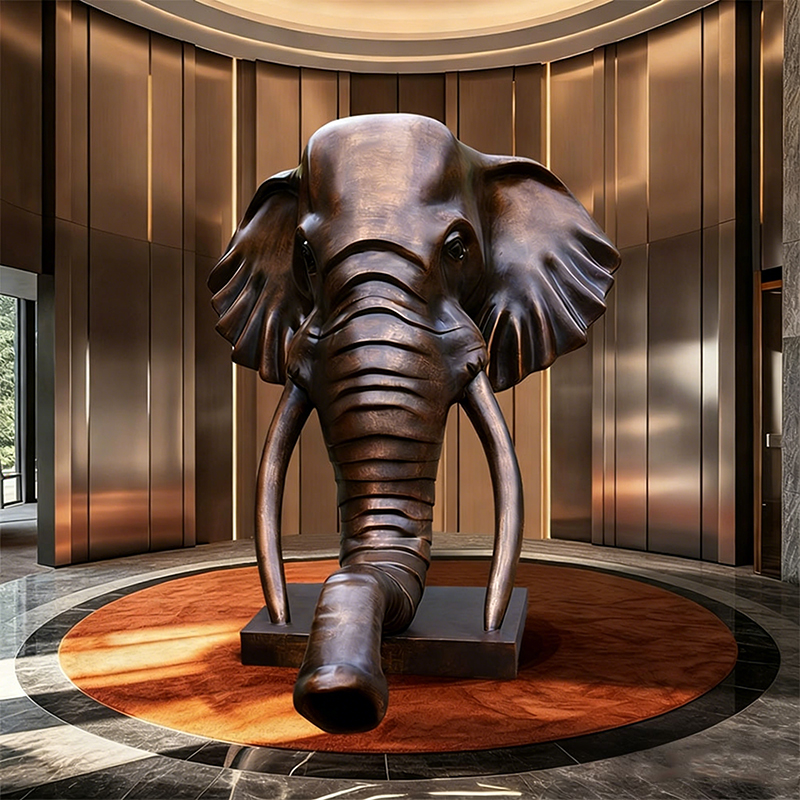
Stainless steel has grown into one of the most popular materials for both indoor and outdoor sculpture due to its unique combination of strength, reflectivity, and resistance to environmental damage. Unlike bronze or iron, stainless steel does not require ongoing patina maintenance or protective coatings to prevent rust, making it a practical choice for public installations, corporate campuses, and private gardens that need to withstand years of exposure with minimal upkeep. Its metallic, reflective surface also interacts dynamically with light and surroundings, giving sculptures a shifting, contemporary quality that changes throughout the day as sunlight and shadows move across the piece.
The form of a stainless steel sculpture determines how it interacts with its surrounding space, and different shapes serve different aesthetic and functional purposes. Abstract geometric forms, built from interlocking planes, spheres, or angular shapes, tend to suit modern architectural settings where clean lines and minimalism are already part of the design language. Organic, flowing forms that mimic natural movement, such as waves, wind patterns, or plant-like curves, often work better in garden settings or spaces intended to feel calming and approachable rather than stark or industrial.
Scale plays a critical role in how a sculpture is perceived within its environment. A piece that feels appropriately impressive in a large plaza may look oversized and overwhelming in a residential courtyard, while a sculpture designed for intimate indoor viewing may feel insignificant when placed in an expansive outdoor plaza. Before selecting a form, measure the intended installation space carefully and consider viewing distances, since sculptures viewed primarily from a distance benefit from bolder, simpler silhouettes, while pieces meant for close-up viewing can incorporate more intricate surface detail.
Surface finish dramatically affects both the visual character and long-term maintenance needs of a stainless steel sculpture. Choosing the right finish requires balancing desired appearance against the realities of the installation environment, particularly regarding sunlight exposure, humidity, and foot traffic.
| Finish Type | Visual Effect | Maintenance Level | Best Setting |
| Mirror Polish | Highly reflective, glass-like | High, shows fingerprints and scratches | Indoor galleries, low-touch areas |
| Brushed Satin | Soft, directional sheen | Low, hides minor marks well | Public spaces, high-traffic areas |
| Matte or Bead-Blasted | Uniform, non-reflective | Very low, resists visible smudging | Outdoor gardens, humid climates |
| Colored PVD Coating | Vivid, tinted metallic tones | Moderate, coating can wear over decades | Statement pieces, branded installations |
Not all stainless steel is created equal, and the specific alloy grade used significantly affects a sculpture's resistance to corrosion, especially in harsh outdoor environments. Grade 304 stainless steel offers solid general-purpose corrosion resistance and is commonly used for sculptures in moderate climates without heavy salt or chemical exposure. Grade 316 stainless steel contains added molybdenum, which provides superior resistance to chloride-induced corrosion, making it the preferred choice for coastal installations, poolside settings, or areas exposed to road salt during winter months.
Beyond material grade, the quality of welding and internal support structures determines whether a sculpture will remain stable and visually seamless over time. Skilled fabricators use continuous, ground-smooth welds that become nearly invisible once polished, while lower-quality work often leaves visible seams or uneven surfaces that detract from the piece's overall finish. For large or cantilevered sculptures, internal steel armatures or reinforced bases are essential to prevent structural failure under wind pressure, and buyers should ask fabricators directly about engineering calculations for wind load, particularly for outdoor pieces exceeding six feet in height.
Proper anchoring is often overlooked but critical for outdoor sculptures, particularly in regions prone to high winds or seismic activity. Most freestanding outdoor pieces require a reinforced concrete footing with embedded anchor bolts, sized according to the sculpture's height, weight, and wind exposure profile. Working with a structural engineer during the planning phase, rather than after installation, helps avoid costly foundation modifications and ensures the piece remains safely secured for its entire service life.
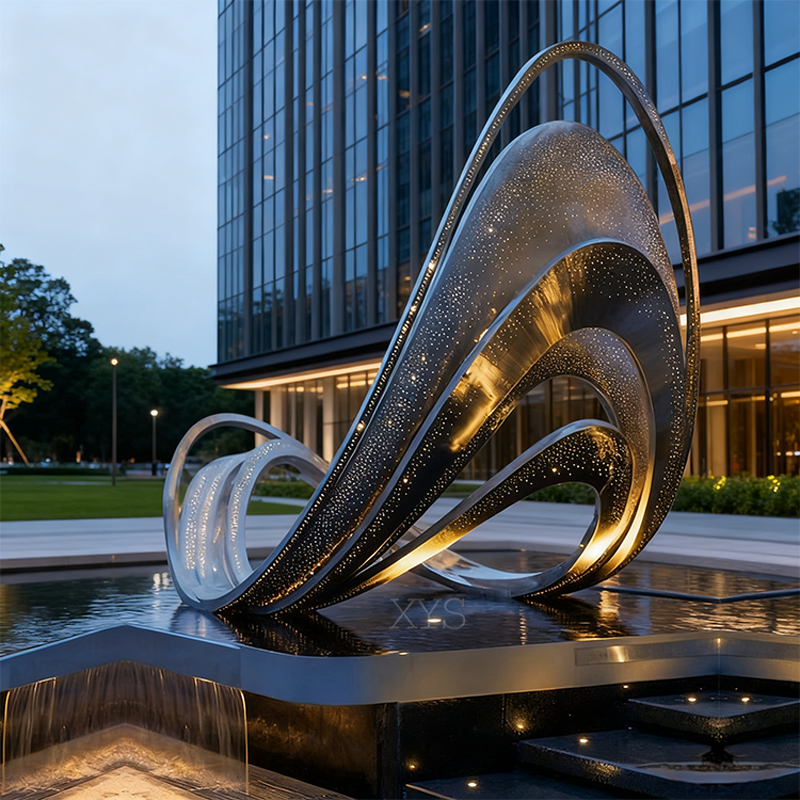
While stainless steel is inherently low-maintenance compared to other sculptural materials, periodic care still helps preserve its original appearance, particularly for mirror-polished or coated finishes. Rinse outdoor sculptures with clean water every few months to remove dust, pollen, and airborne salt deposits before they accumulate, and use a pH-neutral stainless steel cleaner rather than abrasive household products, which can dull the surface finish or scratch delicate coatings.
Ultimately, choosing the right stainless steel sculpture depends on aligning form, finish, and material grade with the specific goals of the installation, whether that involves creating a corporate landmark, enhancing a private garden, or contributing to a public art program. A thoughtful selection process that accounts for viewing distance, environmental exposure, and long-term maintenance expectations results in a piece that continues to perform both structurally and aesthetically for decades, rather than one that requires early repair or replacement due to overlooked practical details.



Daniel H.

Amanda R.

Robert B.

Jennifer S.

James W.

Barry G.

Michael T.

Emily K.

David L.

Sarah M.


Mikey XV

Jagxue